The term itself can send a shiver down the spine of even the most seasoned investor, and the latest Crypto Winter Forecast has been a topic of intense debate among analysts and enthusiasts alike. For many, the phrase conjures images of plummeting prices, widespread panic, and a prolonged period of stagnation where innovation grinds to a halt. The crypto markets, known for their dramatic volatility, operate in distinct cycles of euphoric highs and devastating lows. These extended bear markets, dubbed “crypto winters,” have historically served as a brutal culling of the herd, wiping out speculative projects and testing the resolve of long-term believers.
Past winters, like the one following the Mt. Gox collapse in 2014 and the infamous crash after the ICO boom of 2017-2018, were characterized by declines of over 80% for major assets like Bitcoin and even greater losses for altcoins. These periods were not just financial downturns; they were existential crises for the entire industry. Media headlines declared the death of crypto, retail interest evaporated, and venture capital funding dried up, leaving only the most resilient projects and dedicated developers to build in the silence.
However, the current market landscape presents a radically different picture. While corrections and bear markets are an inevitable part of any financial asset’s lifecycle, the foundation upon which the digital asset ecosystem is built has fundamentally changed. The players are different, the technology is more mature, and the global financial system’s relationship with crypto has evolved in ways that were unimaginable during the last deep freeze. This evolution suggests that while the market may cool, the forecast might not be for a multi-year blizzard but for a shorter, milder chill with surprising pockets of warmth.
This article will dissect the anatomy of a crypto winter, compare the current cycle to historical precedents, and explore the key factors that suggest a surprising deviation from the patterns of the past. We will analyze the stabilizing influence of institutional capital, the growing clarity of global regulation, and the undeniable maturation of blockchain technology itself. By examining these crucial differences, we can build a more nuanced and informed perspective on what the future may hold for the digital asset space.
Understanding the Anatomy of a Crypto Winter

Before we can forecast the weather, we must first understand the climate. A crypto winter is far more than a simple price correction. While a market correction might see a 10-20% drop over a few days or weeks, a crypto winter is a prolonged, systemic downturn that can last for years. It represents a fundamental shift in market sentiment from unbridled optimism to widespread pessimism and apathy.
The key characteristics of a true crypto winter include:
- Massive and Sustained Price Declines: This is the most obvious sign. Major cryptocurrencies like Bitcoin and Ethereum typically fall more than 75% from their all-time highs, and the pain is even more acute for smaller, less-established altcoins, many of which never recover.
- Drastic Reduction in Trading Volume: As prices fall and stay down, casual investors and speculators exit the market. This leads to a significant drop in trading activity across exchanges, as interest wanes and liquidity dries up.
- Negative Mainstream Narrative: The media narrative flips from stories of overnight millionaires and technological breakthroughs to reports of scams, hacks, and regulatory crackdowns. Crypto is often declared “dead” repeatedly during these periods.
- Stagnation in Development and Innovation (Historically): In the past, funding for new projects would evaporate, causing a “brain drain” as developers left the space for more stable industries. Only the most well-funded and ideologically driven projects would continue to build.
It’s this combination of financial, social, and developmental decay that defines a true crypto winter. It’s a stress test for the entire ecosystem, separating fleeting hype from genuine, long-term value.
The Ghosts of Winters Past: A Historical Perspective

To appreciate why the current cycle might be different, we must look at the brutal lessons taught by previous winters. These periods weren’t just numbers on a chart; they were formative events that shaped the industry.
The 2014-2015 Winter: The Mt. Gox Aftermath
The first major crypto winter followed the 2013 bull run, which was largely fueled by the Mt. Gox exchange. When the exchange collapsed in early 2014 after a massive hack, it wiped out hundreds of thousands of bitcoins and shattered the fragile trust in the nascent ecosystem. The aftermath was a brutal, near two-year-long bear market. Bitcoin’s price plummeted by over 85%, and the market was dominated by fear and uncertainty. This winter proved that operational security and reliable infrastructure were paramount for the industry’s survival.
The 2018-2020 Winter: The ICO Bubble Burst
The winter of 2018 was a direct result of the Initial Coin Offering (ICO) mania of 2017. Billions of dollars were raised for projects that often consisted of little more than a slick website and a hastily written whitepaper. When it became clear that the vast majority of these projects had no viable product or path to profitability, the bubble burst spectacularly. The market was flooded with worthless tokens, and regulatory bodies like the SEC began cracking down on fraudulent offerings. This winter was a painful but necessary lesson in fundamentals, forcing the industry to shift its focus from speculative fundraising to building real, usable technology.
Why This Cycle Is Fundamentally Different
While history often rhymes, it rarely repeats itself exactly. Several powerful new forces are at play in the current market cycle that were entirely absent during previous downturns. These factors fundamentally alter the market’s structure and resilience.
The Unprecedented Wall of Institutional Money
The single biggest differentiator is the deep and direct involvement of mainstream institutional players. The last winter was defined by the absence of “smart money.” Today, the landscape is reversed. The launch and wild success of spot Bitcoin and Ethereum ETFs managed by financial titans like BlackRock, Fidelity, and Franklin Templeton have created a permanent, regulated gateway for massive capital inflows.
According to a report from CryptoAnalytics Inc., institutional inflows via these spot ETFs surpassed a staggering $60 billion globally in the first half of 2024 alone. This creates a persistent source of demand and a potential price floor that simply did not exist in 2018. When retail investors panic, there is now a multi-trillion-dollar class of asset managers who view price dips as a strategic buying opportunity, providing a stabilizing counterbalance.
Maturing Technology and a Resilient Developer Base
The 2018 crash was an indictment of an industry built on promises. Today, it’s an industry built on functioning products. The DeFi ecosystem, while still risky, has processed trillions of dollars in volume and survived multiple stress tests. Layer 2 scaling solutions like Arbitrum, Optimism, and Polygon are actively solving Ethereum’s scalability issues, making blockchains faster and cheaper to use. The concept of Real-World Asset (RWA) tokenization is bridging the gap between traditional finance and the digital world.
Furthermore, the developer ecosystem has shown incredible resilience. Dr. Alistair Finch, a lead researcher at the Digital Asset Research Institute, notes a critical difference. “Previous winters were characterized by a near-total collapse in development activity,” he explains. “In contrast, developer commits on major platforms like Ethereum and Solana have remained remarkably stable, even during recent price downturns.” This indicates that the industry is no longer just fueled by price speculation but by a genuine belief in the technology’s long-term potential. Dr. Finch suggests we are in a period of “crypto consolidation” rather than a true winter.
A Clearer Regulatory Path
While regulatory uncertainty remains a challenge, the situation is far less chaotic than in 2018. Back then, there was a genuine fear that governments could ban cryptocurrencies outright. Today, the conversation has shifted from “if” to “how” to regulate. Frameworks like the Markets in Crypto-Assets (MiCA) regulation in Europe and legislative efforts like the FIT21 Act in the United States, while imperfect, provide a roadmap for crypto’s integration into the global financial system. This growing clarity, though slow, reduces long-term risk and gives institutional players the confidence they need to participate.
On-Chain Data: The Conviction of Long-Term Holders
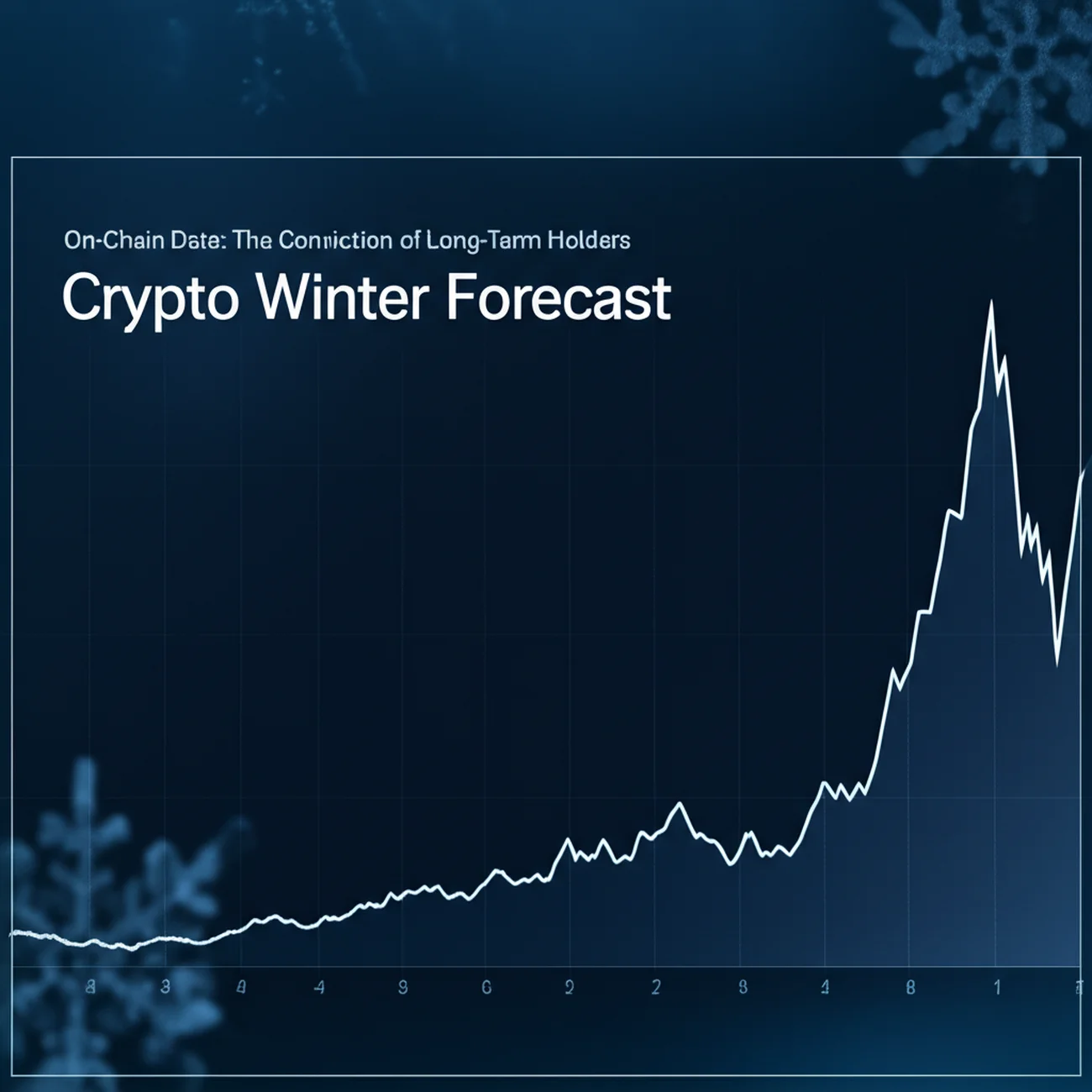
Beyond the headlines and price charts, on-chain data provides a transparent look into investor behavior. One of the most telling metrics is the activity of long-term holders (LTHs). These are market participants who have held their assets for extended periods and are less likely to sell based on short-term volatility.
Recent data from on-chain analytics firm Glassnode reveals that the percentage of Bitcoin held by long-term holders (defined as addresses holding for over 155 days) is hovering near an all-time high. This stands in stark contrast to the 2018 cycle, which saw widespread panic-selling from all cohorts of investors. The current data suggests a much stronger level of conviction among seasoned investors, who are choosing to accumulate during downturns rather than capitulate. This “diamond hands” phenomenon provides another layer of market stability that was previously missing.
A More Nuanced Crypto Winter Forecast

So, what does this all mean for the current crypto winter forecast? The evidence strongly suggests that we are unlikely to see a repeat of the devastating, multi-year deep freeze of 2018. The market is more mature, better capitalized, and technologically more advanced than ever before.
While significant downturns of 50-60% or more are still entirely possible and should be expected in such a volatile asset class, the nature of the recovery is likely to be different. The key drivers for this more optimistic outlook include:
- Institutional Demand Cushion: ETF inflows will likely accelerate during major price dips, absorbing selling pressure and shortening the duration of the downturn.
- Continued Development: The developer community’s resilience ensures that innovation doesn’t grind to a halt, meaning the industry will continue to build value even if prices are stagnant.
- Stronger Holder Base: A larger cohort of high-conviction, long-term investors reduces the likelihood of a cascading panic-sell event.
- Macroeconomic Influence: The crypto market is now more intertwined with traditional markets. Future price action will be heavily influenced by central bank policies, interest rates, and inflation, making it less of an isolated, sentiment-driven bubble.
This doesn’t mean the road ahead will be easy. Projects with weak fundamentals will still fail, and investors can still suffer significant losses. However, the forecast points towards a potential “crypto autumn”—a period of cooling and consolidation—rather than a full-blown, desolate winter.
Conclusion
Navigating the crypto market requires a deep understanding of its cyclical nature. The winters of the past were brutal, cleansing fires that forged a stronger, more resilient industry. However, applying the exact same template to today’s market would be a mistake. The crypto ecosystem of 2024 and beyond is a different beast entirely, fortified by institutional capital, regulatory progress, and proven technological advancements.
The presence of spot ETFs has fundamentally altered market dynamics, creating a structural demand that never existed before. The unwavering commitment of a global developer community ensures that the engine of innovation continues to run, regardless of market sentiment. And on-chain data reveals a class of long-term investors with stronger conviction than ever before.
While the winds of a bear market may still blow cold, the forecast is not for an apocalyptic blizzard. Instead, investors should prepare for a period of consolidation—a crypto autumn where the speculative leaves fall, but the deep-rooted trees of legitimate projects survive and strengthen. The surprising crypto winter forecast is, perhaps, that it won’t be much of a winter at all. For those who focus on technology, fundamentals, and a long-term horizon, this cooling period could present the most significant buying opportunity of the current cycle.
