Altcoins – or cryptocurrencies other than Bitcoin – have exploded in popularity in recent years, attracting significant investment and attention. While Bitcoin remains the dominant force, the altcoin market offers a diverse range of opportunities, from utility-focused tokens to speculative assets. Understanding how altcoin price movements work is crucial for anyone considering investing, trading, or simply keeping abreast of the evolving crypto landscape. This article will delve into the factors driving altcoin price fluctuations, providing a framework for interpreting market trends and making informed decisions. Altcoin price movements are notoriously volatile, influenced by a complex interplay of technological advancements, regulatory changes, market sentiment, and macroeconomic conditions. Successfully navigating this dynamic environment requires a nuanced understanding of the underlying mechanisms.
The rise of altcoins wasn’t a sudden phenomenon; it’s the culmination of several key developments. The initial surge in popularity was largely fueled by the emergence of blockchain technology itself, particularly the development of Ethereum and its subsequent move towards smart contracts. This shift opened the door for a wider range of applications beyond just digital currency, attracting developers and investors seeking innovative solutions. However, the initial excitement was often followed by periods of significant volatility, demonstrating the inherent risks associated with these assets. The success of projects like Cardano, Solana, and Polkadot, which offered unique features and technological advantages, significantly contributed to the growth of the altcoin ecosystem. Furthermore, the increasing adoption of decentralized finance (DeFi) protocols and non-fungible tokens (NFTs) has created new demand and spurred further innovation within the altcoin space. The shift towards institutional investment, while still relatively nascent, represents a potentially transformative force, adding significant weight to certain altcoins.
Understanding the Drivers of Altcoin Price Movements
Several factors contribute to the unpredictable nature of altcoin price movements. Altcoin price movements are rarely driven by a single cause; rather, they’re often a result of a confluence of interconnected elements. One of the most significant drivers is the technological innovation behind a particular altcoin. Projects that introduce novel consensus mechanisms, improve scalability, or enhance security often experience increased demand and, consequently, higher prices. For example, the transition to Proof-of-Stake (PoS) from Proof-of-Work (PoW) on Ethereum has been a major catalyst for many altcoins, as it offers a more energy-efficient and environmentally friendly alternative. The success of these technological advancements directly impacts investor confidence and, subsequently, the price of the altcoin.
Another crucial factor is the overall market sentiment. News headlines, social media trends, and even general economic conditions can significantly influence investor behavior. Positive news about a project’s development, partnerships, or adoption can drive up demand, while negative news or concerns about regulatory risks can trigger a sell-off. The crypto market is notoriously susceptible to “fear and greed,” where investors react disproportionately to perceived risks and opportunities. This emotional component can amplify price swings. Furthermore, the hype and speculation surrounding a particular altcoin can create artificial demand, driving prices higher than their underlying fundamentals warrant. This phenomenon, often referred to as “pump and dump” schemes, can be incredibly damaging to investors.
Regulatory scrutiny also plays a vital role. Government regulations regarding cryptocurrencies and blockchain technology vary significantly across different jurisdictions. Changes in regulations, such as increased taxation, stricter KYC/AML requirements, or outright bans, can have a profound impact on altcoin prices. Positive regulatory developments, such as the approval of Bitcoin ETFs in the United States, can provide a boost to altcoin markets, while negative developments can trigger a sharp decline. The regulatory landscape is constantly evolving, creating uncertainty and volatility for investors.
Technical Analysis – A Tool for Understanding Price Trends
Technical analysis utilizes historical price data and trading patterns to identify potential entry and exit points for investments. It’s a valuable tool for understanding altcoin price movements and predicting future trends. Several technical indicators are commonly employed, including moving averages, relative strength index (RSI), and MACD (Moving Average Convergence Divergence). These indicators help traders assess the strength of a trend, identify overbought or oversold conditions, and detect potential reversals. For example, an RSI reading above 70 generally indicates an overbought condition, suggesting that the price may be due for a pullback. Conversely, an RSI reading below 30 indicates an oversold condition, potentially pointing to a buying opportunity.
Chart patterns, such as head and shoulders, double bottoms, and triangles, can also provide valuable insights into market sentiment and potential price catalysts. Identifying these patterns can help traders anticipate shifts in momentum and make more informed investment decisions. Backtesting these techniques on historical data is crucial to ensure their effectiveness. However, it’s important to remember that technical analysis is just one tool in the investment toolkit and should be used in conjunction with fundamental analysis and risk management.
The Role of Community and Social Media
The altcoin market is heavily influenced by community sentiment and social media activity. Altcoin price movements are often amplified by online discussions and trends. Social media platforms like Twitter, Reddit, and Telegram have become crucial channels for disseminating information, sharing opinions, and coordinating trading strategies. Positive sentiment can drive up demand, while negative sentiment can trigger a sell-off. Influencers and community leaders often play a significant role in shaping market narratives and influencing investor behavior. The spread of misinformation and hype can also contribute to volatility. It’s essential to critically evaluate information sources and be wary of unsubstantiated claims.
Furthermore, the collective voice of the community can provide valuable insights into the underlying technology and potential use cases of an altcoin. Active participation in online forums and discussions can help identify emerging trends and gauge the level of interest in a particular project. However, it’s important to remember that community sentiment can be subjective and influenced by various factors, including personal biases and groupthink.
The Impact of Macroeconomic Factors
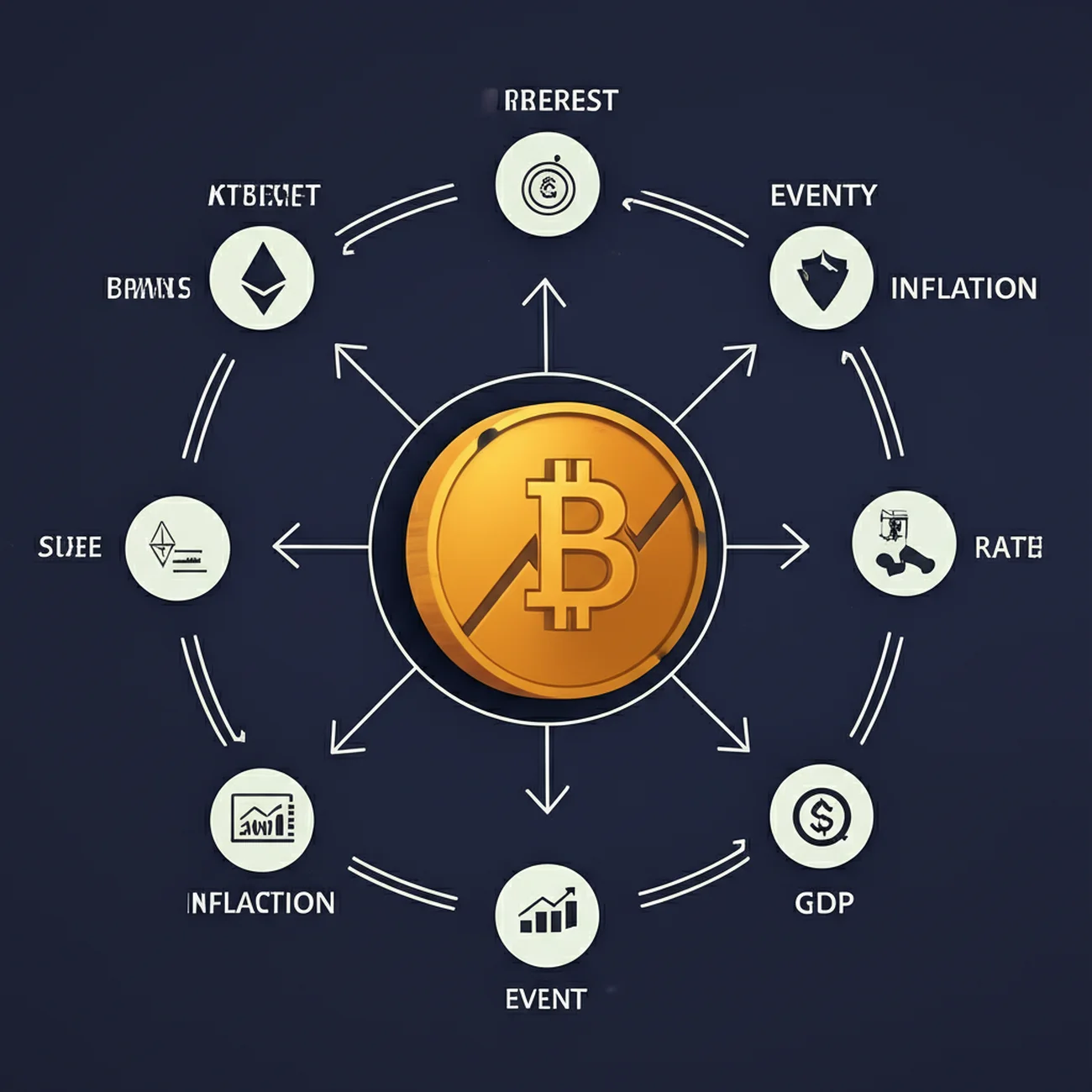
Beyond technological innovation and market sentiment, macroeconomic factors significantly influence altcoin price movements. Interest rates, inflation, and economic growth rates all have a direct impact on investor confidence and, consequently, on altcoin demand. For instance, rising interest rates can make altcoins less attractive to investors seeking higher returns, potentially leading to a decline in prices. High inflation can erode the purchasing power of investors and reduce their willingness to invest in riskier assets like altcoins. Similarly, economic downturns can trigger a flight to safety, driving investors towards more stable assets like gold and, in some cases, altcoins.
Government policies and regulations also play a crucial role. Tax policies, trade restrictions, and financial stability regulations can all impact the attractiveness of altcoins. For example, the imposition of capital controls can restrict the flow of capital into and out of the altcoin market, hindering price appreciation. The global economic climate, including geopolitical events and trade wars, can also influence investor sentiment and market volatility.
The Future of Altcoin Price Movements
The altcoin market is still in its early stages of development, and its future trajectory remains uncertain. Several key trends are likely to shape the evolution of the market in the coming years. Firstly, the increasing adoption of Layer-2 scaling solutions, such as Polygon and Arbitrum, is expected to improve the scalability and efficiency of altcoin networks, potentially boosting their price. Secondly, the rise of decentralized autonomous organizations (DAOs) and tokenized assets is creating new opportunities for investment and governance. Thirdly, the continued development of DeFi protocols and NFTs is driving demand for altcoins that support these innovations. Finally, the increasing regulatory scrutiny of the crypto industry is likely to lead to greater transparency and accountability, potentially enhancing investor confidence.
Looking ahead, we can expect to see a continued evolution of the altcoin ecosystem, with new projects emerging and existing ones adapting to changing market conditions. The success of altcoins will ultimately depend on their ability to deliver real-world value and solve genuine problems. Altcoin price movements are a reflection of this dynamic, and understanding the underlying forces driving these fluctuations is essential for anyone seeking to participate in this rapidly evolving market. The focus will increasingly shift towards projects with strong fundamentals, robust technology, and a clear vision for the future.
Conclusion
Altcoin price movements are a complex and multifaceted phenomenon. They are driven by a combination of technological innovation, market sentiment, regulatory factors, and macroeconomic conditions. Altcoin price movements are not simply about speculation; they reflect the underlying value and potential of individual projects. By understanding the drivers of these fluctuations, investors and traders can make more informed decisions and navigate the risks associated with this dynamic market. Continued research, analysis, and a disciplined approach to risk management are crucial for success in the altcoin space. The future of altcoins hinges on their ability to evolve and adapt to the ever-changing landscape of the digital economy.
