Blockchain technology has moved beyond its initial hype and into the realm of practical applications across numerous industries. Understanding the entire lifecycle of a blockchain – from conception to decommissioning – is crucial for anyone involved in its adoption, development, or management. This article will delve into the key stages of the blockchain lifecycle, providing a comprehensive overview of what happens at each phase and why it’s so important. The core concept revolves around the continuous evolution and adaptation of blockchain systems to meet changing needs and technological advancements. Blockchain lifecycle is not a static process; it’s a dynamic journey. It’s about recognizing that a blockchain isn’t a one-time solution, but rather a foundational infrastructure that requires ongoing maintenance, upgrades, and strategic planning. Ignoring these aspects can lead to vulnerabilities and ultimately, the failure of the entire system. Let’s explore each stage in detail.
Phase 1: Conception & Planning – Laying the Foundation
The initial phase of a blockchain lifecycle begins with a clear understanding of the problem being addressed and the desired solution. This involves identifying the specific use case – whether it’s supply chain management, digital identity, voting systems, or any other application requiring a secure and transparent record. A thorough feasibility study is essential, evaluating factors like scalability, security requirements, regulatory compliance, and cost-effectiveness. Blockchain lifecycle begins with defining the core value proposition – what unique benefits will the blockchain offer compared to existing solutions? This definition will heavily influence the technology selection and the subsequent stages. Early stakeholders – including technical experts, business leaders, and legal counsel – must collaborate to establish a shared vision and roadmap. A well-defined plan, incorporating risk assessment and contingency planning, is paramount. For example, in a supply chain blockchain, initial considerations might include verifying product authenticity and tracking goods throughout the entire process. The planning phase also includes selecting the appropriate blockchain platform – whether it’s a public, private, or consortium blockchain – based on the specific requirements and governance models. Choosing the right platform is a critical decision that will significantly impact the long-term viability of the blockchain.
Phase 2: Development & Testing – Building the Core
Once the conceptual framework is established, the development phase commences. This involves building the core blockchain infrastructure – the consensus mechanism, transaction processing, and data storage. The development team typically utilizes programming languages like Solidity (for Ethereum) or Go (for Hyperledger Fabric) to create the blockchain protocol. Rigorous testing is a critical component of this phase. This includes unit testing, integration testing, and security testing to identify and address potential vulnerabilities. Blockchain lifecycle often involves extensive audits by third-party security firms to ensure the system’s robustness and resistance to attacks. Smart contracts, which automate the execution of agreements, are a key element of this phase. These contracts must be carefully designed and tested to prevent unintended consequences. Furthermore, testing should encompass a wide range of scenarios, including edge cases and potential failure modes. Simulation environments are frequently used to model the blockchain’s behavior under various conditions. The goal is to create a functional and reliable blockchain prototype that can be refined and improved. Early testing also includes performance testing to ensure the blockchain can handle the expected transaction volume.
Phase 3: Deployment & Launch – Bringing the Blockchain to Life
The deployment phase marks the transition from the development phase to a live blockchain network. This involves deploying the blockchain software to a production environment and launching the network to the public. This is often the most complex and challenging phase, requiring careful attention to security, scalability, and operational considerations. A phased rollout is often recommended, starting with a small group of users and gradually expanding the network as confidence grows. Monitoring and logging are essential during this phase to identify and address any issues that arise. Initial monitoring focuses on key performance indicators (KPIs) such as transaction throughput, latency, and error rates. Post-launch, ongoing maintenance and upgrades are necessary to address bugs, improve performance, and adapt to evolving user needs. Blockchain lifecycle management includes establishing clear procedures for handling incidents and responding to security breaches. A robust incident response plan is crucial for minimizing the impact of any potential problems. Furthermore, continuous monitoring of network health and resource utilization is vital for ensuring the blockchain remains stable and efficient.
Phase 4: Maintenance & Governance – Ensuring Long-Term Stability
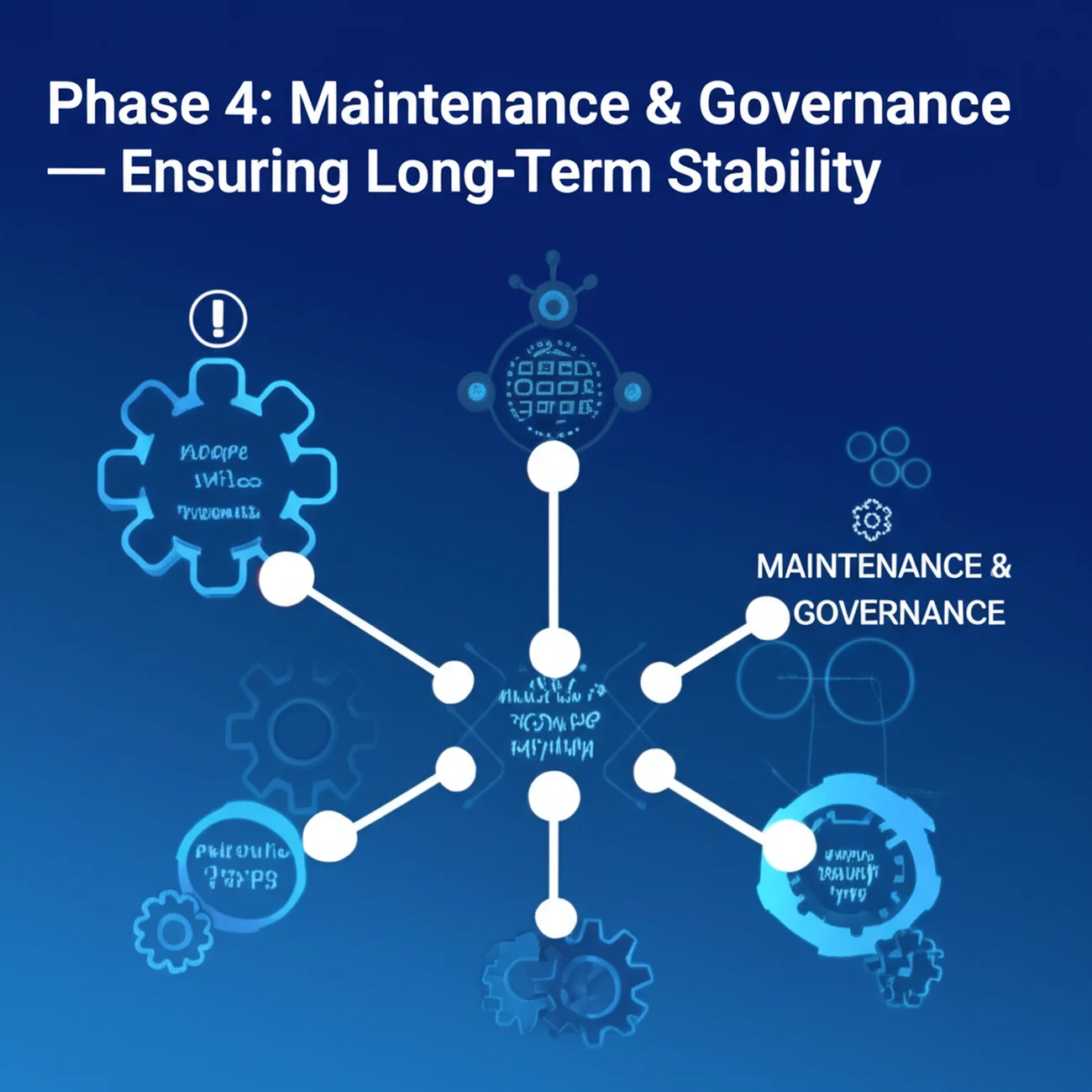
Once the blockchain is live, ongoing maintenance and governance are essential for ensuring its long-term stability and sustainability. This phase involves addressing bugs, improving performance, and adapting to changing regulatory requirements. Regular security audits are conducted to identify and mitigate potential vulnerabilities. Governance mechanisms, such as consensus protocols and decision-making processes, are established to ensure the blockchain’s direction is aligned with the needs of the community. This includes establishing clear rules for upgrades, modifications, and dispute resolution. Blockchain lifecycle management also includes tracking key metrics such as network participation, transaction volume, and user satisfaction. Analyzing these metrics can provide valuable insights into the blockchain’s performance and identify areas for improvement. Furthermore, community engagement is crucial for fostering a healthy and active ecosystem. This can involve providing support to users, soliciting feedback, and encouraging participation in governance decisions. Regular communication with stakeholders is vital for maintaining transparency and building trust.
Phase 5: Decommissioning & Retirement – Moving Towards the Future
The final phase of the blockchain lifecycle involves decommissioning the blockchain network and transitioning to a new infrastructure. This is a complex process that requires careful planning and execution. It’s not simply about deleting the blockchain; it’s about migrating the data and applications to a new platform. The decision to decommission a blockchain should be made after careful consideration of its value and its potential impact on the ecosystem. Blockchain lifecycle management includes documenting the entire process and ensuring that all data and applications are properly migrated. This is particularly important for legacy systems that rely on the blockchain. The decommissioning process should be conducted in a way that minimizes disruption to users and ensures a smooth transition to the new infrastructure. Furthermore, the community should be informed about the decommissioning process and given the opportunity to participate in the transition. Ultimately, the goal is to ensure that the blockchain network is retired in a way that minimizes its impact on the broader ecosystem. This might involve integrating the blockchain data into a larger platform or allowing users to migrate their data to a different system.
Conclusion
The blockchain lifecycle is a continuous process of evolution and adaptation. Understanding the different stages – from initial conception to decommissioning – is critical for anyone involved in blockchain technology. Each phase presents unique challenges and opportunities, and careful planning and execution are essential for ensuring the long-term success of the blockchain. The focus on blockchain lifecycle management extends beyond simply deploying a system; it encompasses ongoing maintenance, security, governance, and community engagement. As blockchain technology continues to mature, the importance of a robust and well-managed lifecycle will only increase. By embracing a proactive and strategic approach, organizations can maximize the value of their blockchain investments and unlock the full potential of this transformative technology. The ability to adapt and evolve alongside the blockchain is key to sustained success.
