The volatile world of cryptocurrency has fueled a surge in interest, leading to increased speculation and, consequently, a growing demand for tools that can help predict future price movements. Crypto Asset Price Prediction Models are becoming increasingly sophisticated, offering a glimmer of hope for investors seeking to navigate the complexities of the market. However, it’s crucial to understand that predicting the future with certainty is impossible – these models are tools designed to improve probability, not guarantee profits. This article will delve into the landscape of these models, exploring their different types, strengths, weaknesses, and the crucial factors that contribute to their effectiveness. We’ll also discuss the importance of understanding the underlying data and the limitations of any prediction system.
The Rise of Prediction

For years, crypto prices were largely driven by sentiment and anecdotal evidence. However, recent years have witnessed a shift towards quantitative analysis, with a growing emphasis on data-driven approaches. The ability to analyze historical price data, identify patterns, and leverage mathematical algorithms has become increasingly valuable for traders and investors. The rise of blockchain technology and the increasing adoption of cryptocurrencies have created a fertile ground for these predictive models to flourish. The initial excitement surrounding Bitcoin and Ethereum has been tempered by a more realistic assessment of market volatility, leading to a greater focus on long-term trends rather than short-term fluctuations. This shift necessitates a more nuanced understanding of how these models can be applied effectively.
Types of Crypto Asset Price Prediction Models
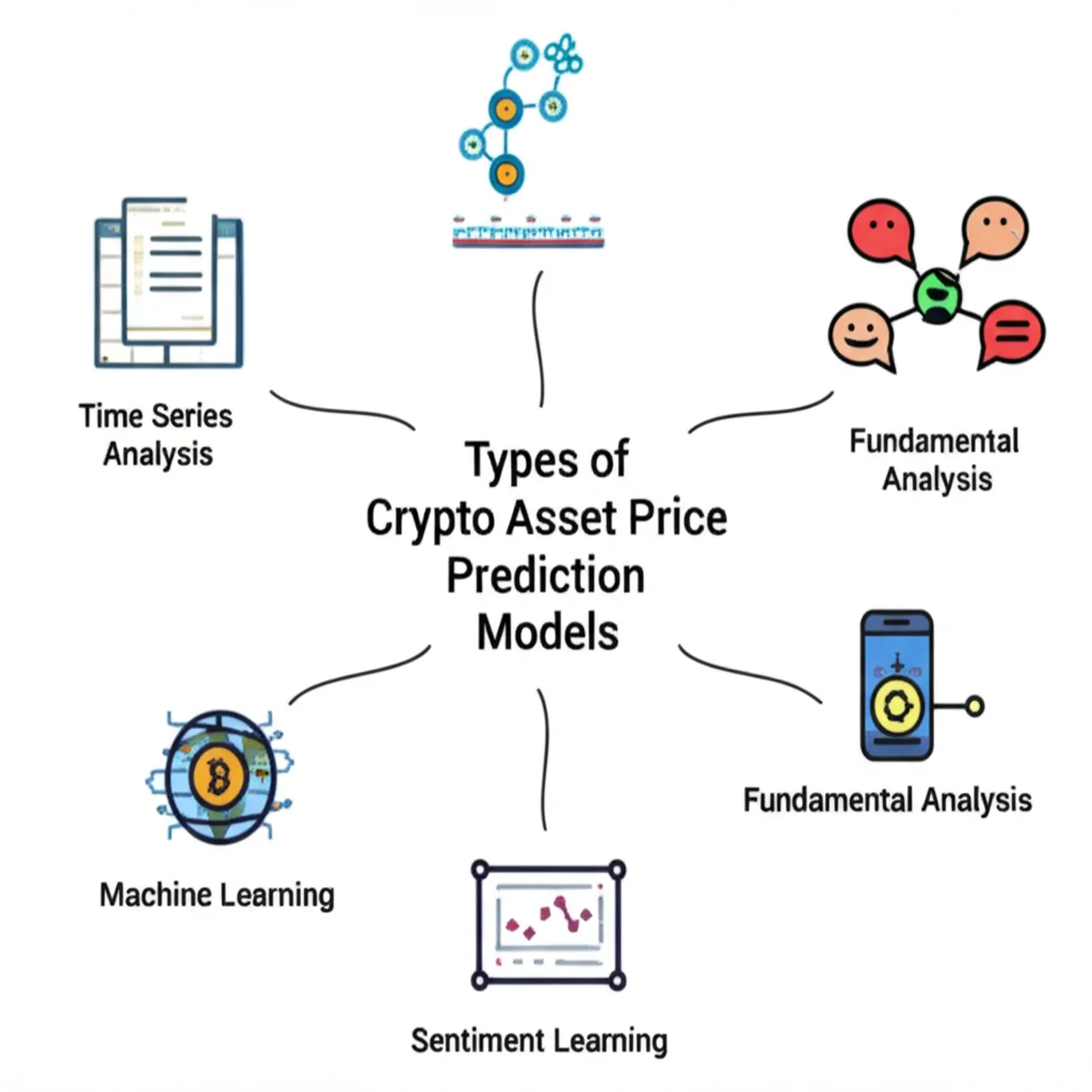
Several different types of models are currently employed to forecast crypto prices. Each approach has its own strengths and weaknesses, and the most effective model often depends on the specific cryptocurrency and the trader’s risk tolerance.
-
Time Series Analysis: This is arguably the most fundamental approach. It involves analyzing historical price data – including open, high, low, and close prices – to identify trends and patterns. Techniques like moving averages, exponential smoothing, and ARIMA (Autoregressive Integrated Moving Average) models are commonly used. Time series analysis provides a baseline understanding of price behavior, but it struggles to account for external factors that can influence market sentiment. For example, a sudden news event might trigger a sharp price increase, regardless of the underlying technical indicators.
-
Machine Learning Models: These models leverage algorithms to learn from data and make predictions. Popular choices include:
- Support Vector Machines (SVMs): SVMs excel at classifying data points into different categories, making them suitable for identifying patterns in price movements. They are particularly effective when dealing with high-dimensional data.
- Random Forests: Random Forests are an ensemble learning method that combines multiple decision trees to improve accuracy and reduce overfitting. They are robust to noise and can handle complex relationships within the data.
- Neural Networks (Deep Learning): Neural networks, particularly recurrent neural networks (RNNs) and long short-term memory (LSTM) networks, are capable of capturing complex temporal dependencies in data. They are particularly useful for analyzing sequential data like price charts. Deep learning models have shown remarkable success in predicting price movements, but require substantial amounts of data and computational resources.
-
Sentiment Analysis: This approach focuses on analyzing news articles, social media posts, and other textual data to gauge market sentiment. Natural Language Processing (NLP) techniques are used to extract sentiment scores – positive, negative, or neutral – and correlate them with price movements. Sentiment analysis can provide valuable insights into investor psychology, but it’s prone to bias and can be difficult to interpret accurately. The accuracy of sentiment analysis is heavily reliant on the quality and breadth of the data used.
-
Statistical Arbitrage Models: These models exploit temporary price discrepancies between different exchanges or trading platforms. They automatically buy and sell assets based on these discrepancies, aiming to profit from small price fluctuations. Statistical arbitrage requires constant monitoring and adaptation to changing market conditions.
Factors Influencing Crypto Price Prediction Accuracy
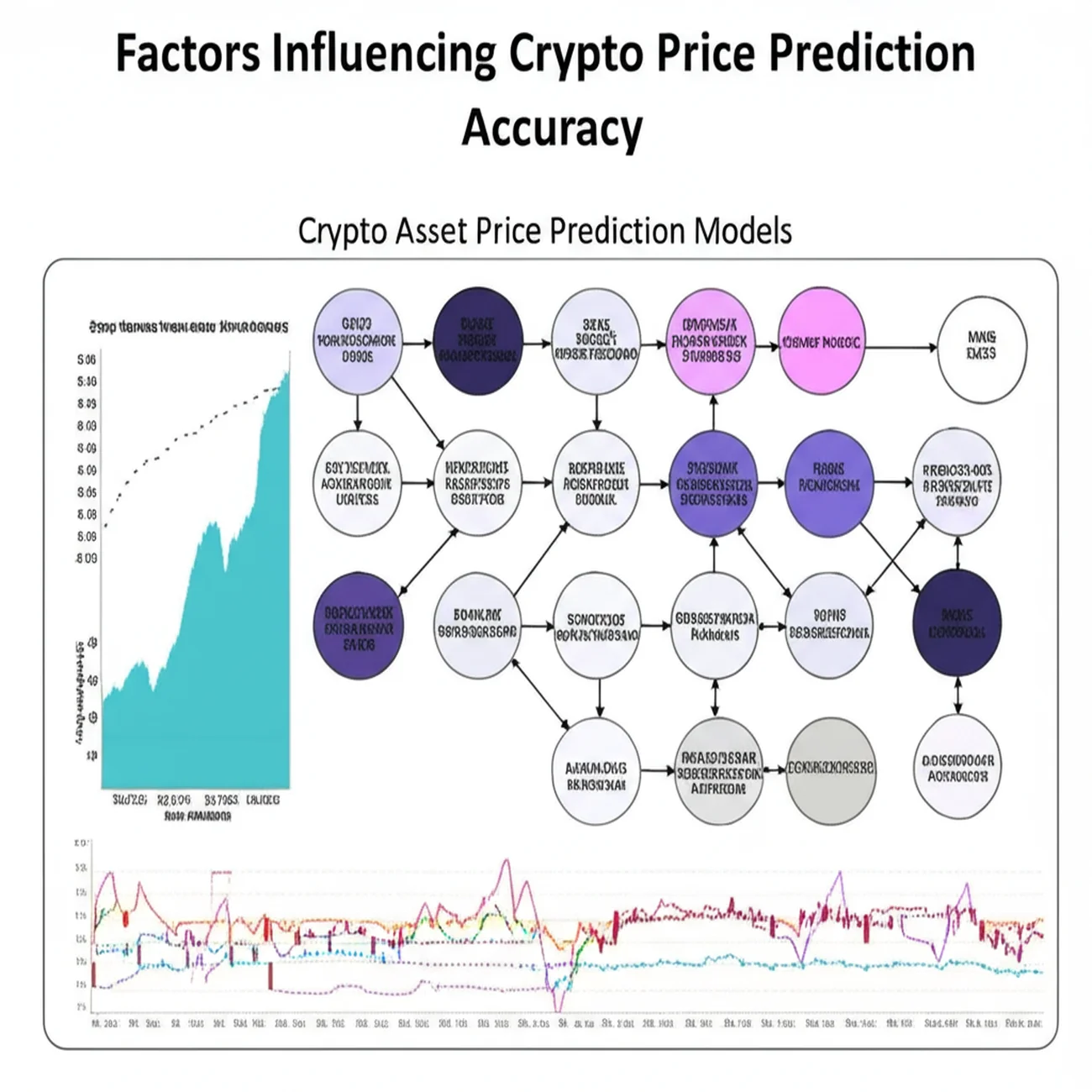
It’s crucial to recognize that no model is perfect. Several factors significantly impact the accuracy of crypto price predictions.
-
Market Volatility: High volatility – characterized by rapid and unpredictable price swings – makes accurate prediction significantly more challenging. Sudden news events, regulatory changes, and macroeconomic factors can all contribute to increased volatility.
-
Market Sentiment: As mentioned earlier, investor sentiment plays a crucial role. Fear and greed can drive prices in both directions, making it difficult to predict the future.
-
Trading Volume: Increased trading volume can provide more data for analysis, but it can also amplify price movements.
-
Correlation with Fundamental Factors: While technical analysis is important, incorporating fundamental factors like market capitalization, trading volume, and supply and demand can improve prediction accuracy. However, these factors are often difficult to quantify and can be influenced by external events.
-
Data Quality: The accuracy of any model is directly dependent on the quality of the data used to train it. Dirty or incomplete data can lead to inaccurate predictions.
-
Black Swan Events: These are rare, unpredictable events that have a significant impact on the market. They can dramatically alter market dynamics and make accurate prediction extremely difficult.
Limitations and Challenges

Despite advancements in predictive modeling, crypto price prediction remains a challenging endeavor. Several limitations need to be considered:
-
The “Noise” Problem: The crypto market is inherently noisy – characterized by a high degree of randomness and unpredictability. It’s difficult to filter out the noise and identify genuine patterns.
-
Overfitting: Models can sometimes become overly specialized to historical data, leading to poor performance on new data. Regularization techniques and careful validation are essential to prevent overfitting.
-
Changing Market Dynamics: The crypto market is constantly evolving, with new technologies, regulations, and trends emerging regularly. Models need to be continuously updated and retrained to remain relevant.
-
Lack of Transparency: The decentralized nature of cryptocurrencies makes it difficult to understand the underlying mechanisms driving price movements. This lack of transparency can hinder the development of reliable prediction models.
The Role of Human Expertise

While sophisticated models can provide valuable insights, expert knowledge remains essential for interpreting the results and making informed decisions. A seasoned trader or analyst can combine the strengths of different models with their own intuition and experience to identify potential opportunities and mitigate risks. Furthermore, understanding the broader market context – including macroeconomic trends, geopolitical events, and regulatory developments – is crucial for assessing the potential impact of any prediction.
Conclusion
Crypto asset price prediction models represent a powerful tool for navigating the complexities of the cryptocurrency market. However, it’s crucial to approach these models with a healthy dose of skepticism and to recognize their limitations. The most effective approach involves combining quantitative analysis with human expertise, leveraging a variety of models and continuously monitoring market conditions. Ultimately, predicting the future of crypto is an inexact science, but the pursuit of improved prediction accuracy is driving innovation and potentially unlocking new opportunities for investors. As the technology continues to evolve, we can expect to see even more sophisticated and nuanced models emerge, further enhancing our ability to understand and potentially predict the movements of these volatile assets. Remember that crypto asset price prediction models are tools, not guarantees, and should be used in conjunction with thorough research and risk management.
