
Navigating the world of digital assets has evolved far beyond simply buying and holding. For savvy investors, the real paradigm shift lies in the burgeoning field of crypto yield generation, a dynamic ecosystem where cryptocurrencies are not just static assets but active, income-producing instruments. Unlike a traditional savings account that might offer a fraction of a percent in interest, the decentralized finance (DeFi) landscape provides a multitude of avenues to put your capital to work, often generating returns that are orders of magnitude higher. This potential for enhanced yield is redefining what it means to build wealth in the digital age.
The core principle is simple: make your crypto work for you. Instead of letting your assets sit idle in a wallet, you can participate in the foundational activities of a decentralized financial system. This includes lending your tokens to others, providing the liquidity necessary for exchanges to function, or helping to secure a network’s operations. Each of these actions provides value to the ecosystem, and in return, you are compensated, creating a powerful stream of passive income. This is a fundamental departure from the speculative nature of trading, focusing instead on sustainable, long-term growth through participation.
This journey from passive holder to active yield generator requires a new mindset and an understanding of the underlying mechanics. The strategies involved range from the relatively straightforward, like staking well-established cryptocurrencies, to the more complex and aggressive, such as multi-layered yield farming. Each method comes with its own unique profile of risk and reward, demanding a level of due diligence that is paramount for success. Understanding these nuances is the first step toward unlocking the full potential of your digital asset portfolio.
This article serves as a comprehensive guide to the world of crypto yield generation. We will explore the foundational concepts, break down the most popular and effective strategies, and critically examine the associated risks. By understanding both the opportunities and the potential pitfalls, you can learn how to navigate this exciting frontier safely and build a robust strategy for generating sustainable yield with your digital assets.
Understanding the Foundations of Crypto Yield

At its heart, crypto yield is generated by facilitating the core functions of a decentralized economy. In traditional finance (TradFi), institutions like banks act as intermediaries, taking deposits and lending them out while capturing the majority of the profit from the interest rate spread. Decentralized Finance (DeFi) removes these intermediaries, replacing them with automated, transparent code known as smart contracts.
When you participate in DeFi yield generation, you are essentially stepping into the role previously held by the bank. By lending your assets or providing liquidity, you are directly fueling the financial machinery of the ecosystem. The interest paid by borrowers or the fees paid by traders are passed directly to you, the capital provider, with the smart contract only taking a small, predetermined protocol fee. This disintermediation is what allows for significantly higher yields compared to the legacy financial system.
A popular and often recommended entry point into this world is through stablecoins. These are cryptocurrencies pegged to the value of a stable asset, like the U.S. dollar (e.g., USDC, USDT, DAI). By using stablecoins for lending or liquidity provision, you can generate attractive yields while mitigating the price volatility risk associated with assets like Bitcoin or Ethereum. This allows you to focus purely on the yield generated by the protocol itself, making it an excellent way to learn the ropes before moving on to more complex strategies involving volatile assets.
Key Strategies for Crypto Yield Generation

The DeFi landscape offers a diverse toolkit of strategies for earning passive income. While some are simple and relatively low-risk, others are more complex and carry higher potential rewards and dangers. Understanding the main methods is crucial for building a diversified yield-generating portfolio.
Staking
Staking is one of the most fundamental ways to earn yield and is native to cryptocurrencies that use a Proof-of-Stake (PoS) consensus mechanism. In a PoS system, network participants, known as validators, lock up or “stake” a certain amount of the network’s native token to get the right to validate transactions and create new blocks. This process is essential for maintaining the security and integrity of the blockchain.
As a reward for their contribution and for putting their capital at risk, validators receive staking rewards. These rewards typically come from a combination of new tokens created with each block (inflationary rewards) and a portion of the transaction fees paid by network users. For everyday investors, you don’t need to run your own validator node. You can delegate your tokens to a professional validator or use a staking pool through an exchange or a dedicated platform, making the process accessible to everyone. Popular PoS networks for staking include Ethereum (ETH), Cardano (ADA), Solana (SOL), and Polkadot (DOT).
Liquidity Providing (LP)
Liquidity providing is the backbone of decentralized exchanges (DEXs) like Uniswap, SushiSwap, and PancakeSwap. These platforms use an Automated Market Maker (AMM) model, which relies on user-supplied “liquidity pools” to facilitate trades instead of a traditional order book. A liquidity pool is simply a smart contract filled with a pair of tokens, for example, ETH and USDC.
As a liquidity provider, you deposit an equal value of both tokens into the pool. In return for providing this crucial liquidity, you receive a share of the trading fees generated every time someone swaps between those two tokens. These fees can be substantial, especially for popular trading pairs or during periods of high market volume. However, liquidity providing comes with a unique risk known as impermanent loss, which occurs when the price of the two tokens in the pool diverges.
Lending and Borrowing
Decentralized lending platforms like Aave and Compound function as autonomous money markets. They allow users to lend their crypto assets to a pool from which other users can borrow. Lenders earn a variable interest rate based on the supply and demand for that specific asset. If many people want to borrow an asset and few are willing to supply it, the interest rate for lenders goes up, incentivizing more supply.
The entire system is secured through over-collateralization. To take out a loan, a borrower must deposit collateral worth significantly more than the value of the loan itself. For example, to borrow $500 worth of USDC, a user might need to post $1,000 worth of ETH as collateral. This ensures that even if the price of the collateral drops, the protocol can automatically liquidate it to repay the lenders, protecting their capital. For lenders, this is a relatively straightforward way to earn a steady yield, particularly on stablecoins.
Yield Farming (Liquidity Mining)
Yield farming is a more advanced and aggressive form of crypto yield generation. It often starts with liquidity providing, but adds an extra layer of incentives. To attract capital and bootstrap their ecosystems, many DeFi protocols will offer additional rewards to liquidity providers in the form of their own native governance token. This practice is also known as liquidity mining.
For example, a new DEX might not only give you a share of the trading fees for providing liquidity but also reward you with its NEWDEX token. This can dramatically increase the overall Annual Percentage Yield (APY). Yield farmers often move their capital between different protocols, constantly chasing the highest returns. While the potential for profit is immense, the risks are also amplified, as you are exposed to the price volatility of both the LP tokens and the new reward token, which can often be highly speculative.
Liquid Staking
Liquid staking is an innovative solution that addresses a major drawback of traditional staking: illiquidity. When you stake a token like ETH, it is locked in a contract and cannot be used for other purposes. Liquid staking protocols like Lido and Rocket Pool solve this problem.
When you stake your ETH through a liquid staking provider, you receive a derivative token (a “liquid staking token” or LST) in return, such as stETH from Lido. This stETH token represents your staked ETH and automatically accrues staking rewards. The key benefit is that stETH is a fully liquid ERC-20 token that you can use across the DeFi ecosystem. You can lend it on Aave, provide it as liquidity on a DEX, or use it as collateral, all while continuing to earn the underlying ETH staking rewards. This allows you to “stack” yields from multiple sources, significantly boosting your capital efficiency.
Evaluating Risks in Crypto Yield Generation
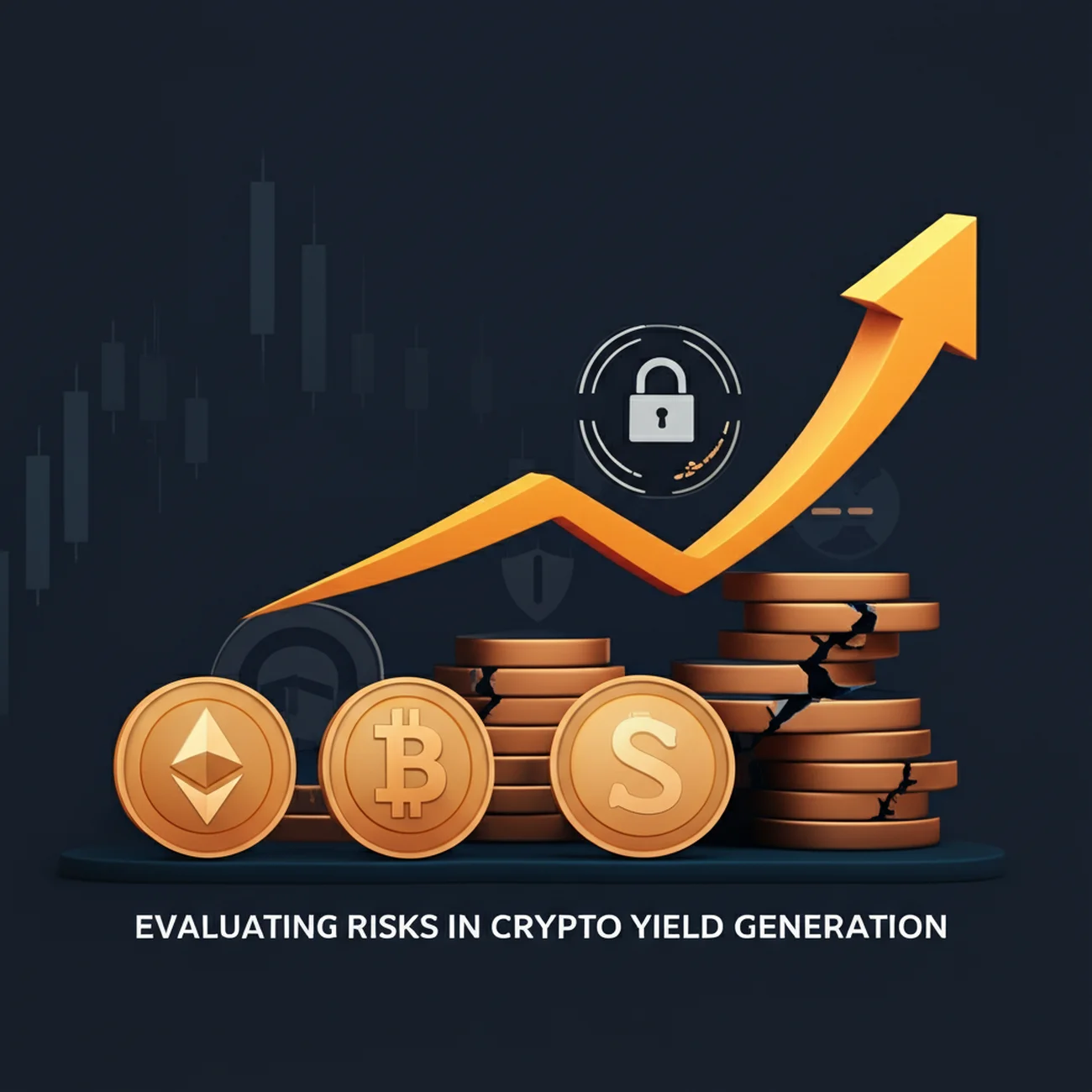
The allure of high yields can be powerful, but it’s crucial to approach this space with a clear understanding of the inherent risks. Unlike insured bank deposits, your capital in DeFi is exposed to a unique set of dangers. Acknowledging and managing these risks is the hallmark of a successful yield strategist.
Smart Contract Risk
Every DeFi protocol is built on smart contracts, which are pieces of code that run on the blockchain. While this code is transparent and auditable, it is not infallible. A bug, vulnerability, or exploit in a protocol’s code can be targeted by malicious actors, potentially leading to a partial or complete loss of all funds locked in the contract. While reputable projects undergo multiple security audits from third-party firms, no audit can guarantee 100% security. Always look for projects with a strong history and multiple audits from well-known security firms.
Impermanent Loss
This is a specific risk for liquidity providers in AMMs. Impermanent loss is the difference in value between holding two assets in a liquidity pool versus simply holding them in your wallet. If the prices of the two tokens diverge significantly in either direction, the value of your holdings in the LP will be less than if you had just held the tokens separately. The trading fees you earn are meant to offset this potential loss, but in highly volatile markets, the impermanent loss can outweigh the fees, resulting in a net negative outcome compared to just HODLing.
Market and Volatility Risk
This is the most straightforward risk. The value of the crypto assets you are using to generate yield can fluctuate dramatically. A 50% APY on a token that loses 90% of its value over the year is still a significant net loss in dollar terms. This is particularly relevant in yield farming, where rewards are often paid in a protocol’s highly volatile native token. It’s essential to consider the quality and long-term viability of the assets you are holding, not just the advertised yield percentage.
Regulatory Risk
The legal and regulatory landscape for cryptocurrency and DeFi is still in its infancy and varies widely by jurisdiction. Governments around the world are still determining how to approach this new technology. A sudden change in regulations, a crackdown on certain types of protocols, or the classification of some tokens as securities could negatively impact the platforms you use and the assets you hold. This remains an unpredictable, long-term risk for the entire industry.
Tools and Platforms to Get Started
Embarking on your yield generation journey requires the right set of tools. Interacting with the decentralized web is different from using a traditional financial application, and understanding the core components is essential for a secure and efficient experience.
Choosing a Wallet
Your primary tool for DeFi is a non-custodial wallet. Unlike holding crypto on a centralized exchange, a non-custodial wallet gives you sole control over your private keys and, therefore, your funds. MetaMask is the most popular browser-extension wallet for Ethereum and other EVM-compatible chains. Other excellent options include Trust Wallet for mobile and hardware wallets like Ledger or Trezor for the highest level of security.
Centralized vs. Decentralized Options
For beginners, centralized exchanges (CEXs) like Coinbase, Binance, or Kraken offer simplified “Earn” or “Staking” products. These are very easy to use; you simply click a button to stake your assets. The trade-off is that you are entrusting your funds to a third party (counterparty risk) and the yields are often lower than what you can find directly in DeFi. Decentralized applications (dApps) require more learning but offer higher potential returns and allow you to maintain self-custody of your assets, which aligns with the core ethos of crypto: “not your keys, not your coins.”
Analytics and Portfolio Trackers
As you begin to deploy capital across different protocols and blockchains, keeping track of everything can become a challenge. Portfolio trackers and analytics platforms are indispensable tools. Websites like Zapper, DeBank, and ApeBoard allow you to connect your wallet address and see all of your DeFi positions, debts, and rewards in a single, unified dashboard. For discovering and vetting new opportunities, platforms like DeFi Llama provide invaluable data on the Total Value Locked (TVL), a key metric for gauging a protocol’s size and user trust.
Developing a Sustainable Strategy for Crypto Yield Generation
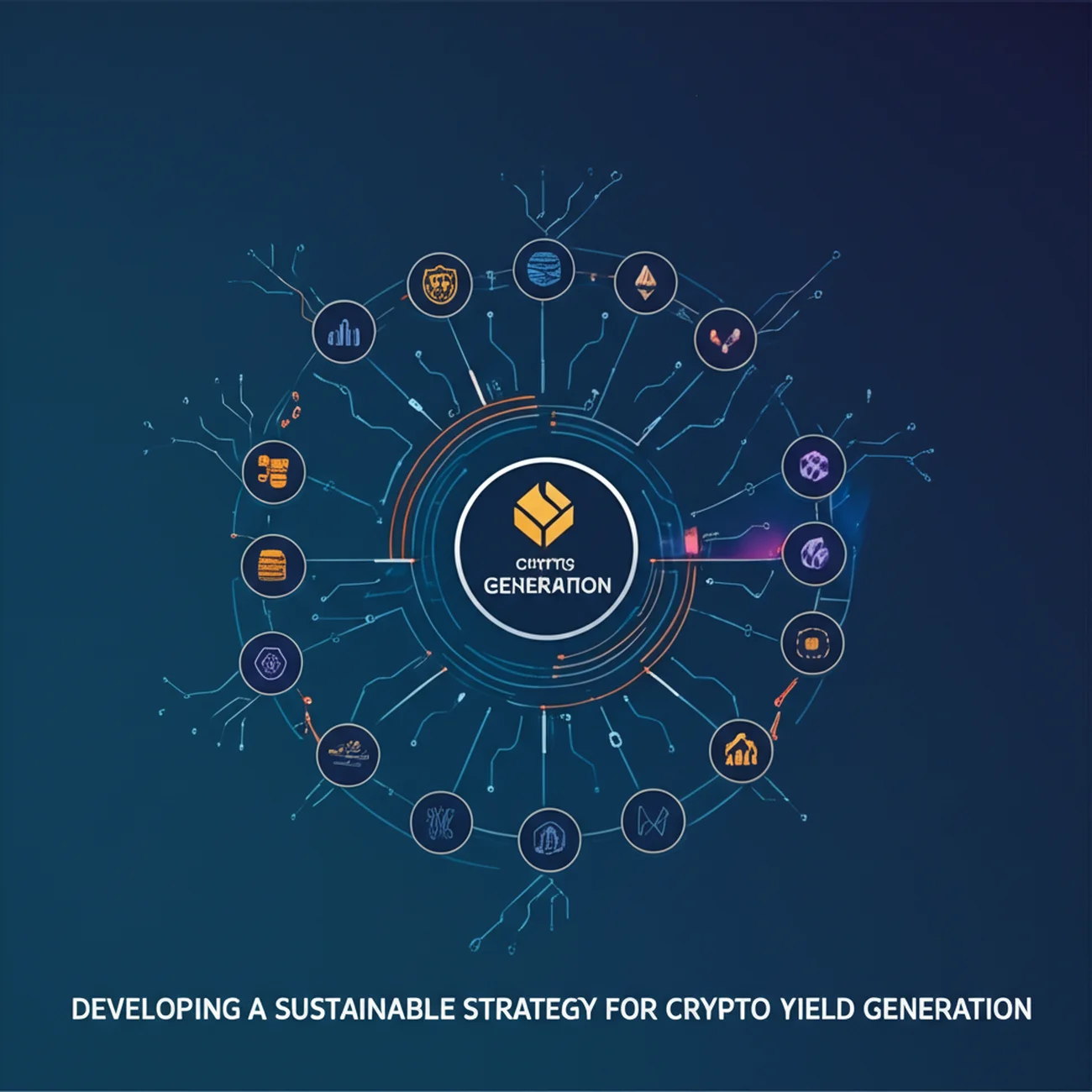
Chasing the highest APY often leads to ruin. A successful and sustainable approach to crypto yield generation is built on a foundation of careful planning, robust risk management, and continuous learning.
Risk Management
The golden rule of crypto applies here more than anywhere else: do not invest more than you can afford to lose. Start small to understand the mechanics before committing significant capital. Furthermore, diversification is key. Avoid putting all your funds into a single protocol or strategy. A well-balanced approach might include a base of lower-risk ETH staking, a portion allocated to stablecoin lending on blue-chip platforms like Aave, and a smaller, more speculative “sleeve” for higher-risk yield farming opportunities.
Due Diligence (DYOR)
“Do Your Own Research” is a mantra in the crypto space for a reason. Before interacting with any protocol, you must vet it thoroughly.
– Team and Community: Is the team public and reputable? Is there an active and engaged community on platforms like Discord and Twitter?
– Security Audits: Has the protocol been audited by multiple well-regarded security firms? Check the audit reports for any unresolved critical issues.
– Tokenomics: Understand how the yield is generated. Is it from real revenue like trading or borrowing fees, or is it purely from inflationary token emissions? Yields based on high emissions are often unsustainable and can lead to the token’s price crashing. Look for protocols with a clear path to real, sustainable revenue.
Starting Small with Blue-Chips
For anyone new to the space, the best approach is to start with small amounts of capital on the most established and time-tested DeFi protocols. These are often referred to as “blue-chips.” Platforms like Uniswap, Aave, Compound, and Lido have been operating for years, have billions of dollars in locked value, and have weathered multiple market cycles. Learning the ropes in these relatively safer environments will provide you with the experience and confidence needed to explore more niche opportunities later on.
Conclusion
Crypto yield generation represents a profound evolution in how we interact with and grow our capital. By moving beyond simple HODLing and actively participating in decentralized networks, investors can unlock powerful streams of passive income that are largely inaccessible in the traditional financial world. From the foundational security of staking and the steady returns of lending to the high-potential world of liquidity providing and yield farming, the strategies are as diverse as the crypto ecosystem itself.
However, this great opportunity is intrinsically linked with significant and unique risks. Smart contract vulnerabilities, market volatility, and complex mechanisms like impermanent loss demand a cautious and educated approach. Success in this domain is not defined by chasing the most outlandish APYs but by a commitment to rigorous due diligence, prudent risk management, and continuous learning.
By starting with established platforms, diversifying your strategies, and never investing more than you can afford to lose, you can begin to navigate this exciting frontier with confidence. The world of decentralized finance is still in its early innings, and for those willing to understand its mechanics and respect its risks, the potential to generate meaningful, sustainable yield is truly unlocked.
