In the fast-paced, 24/7 world of digital currencies, access to timely and accurate crypto asset price updates is not just an advantage—it’s a necessity. Unlike traditional stock markets that operate within fixed hours, the cryptocurrency market never sleeps. This constant activity, driven by a global base of participants, results in prices that can fluctuate dramatically within minutes or even seconds. For traders, investors, and developers alike, having a finger on the pulse of the market is crucial for making informed decisions, managing risk, and capitalizing on opportunities as they arise.
The significance of real-time data cannot be overstated. A delay of just a few seconds can be the difference between a profitable trade and a significant loss. This data is the lifeblood of automated trading bots, the foundation of decentralized finance (DeFi) protocols that rely on accurate price feeds for liquidations and lending, and the primary tool for individual investors trying to navigate the market’s inherent volatility. Without instant updates, participants are essentially flying blind, unable to react to breaking news, shifts in market sentiment, or sudden price movements.
This article serves as a comprehensive guide to understanding the world of crypto asset price data. We will explore where this information originates, demystify the technology that delivers it to your screen in the blink of an eye, and examine the various tools and platforms available for accessing it. Furthermore, we will delve into the critical metrics that provide context beyond a simple price ticker and discuss how to evaluate the quality and reliability of a data source. Whether you are a seasoned trader or a newcomer to the space, understanding the mechanics of price data is fundamental to navigating the digital asset landscape successfully.
Understanding the Source of Crypto Prices
A common misconception among newcomers is that there is a single, official price for a cryptocurrency like Bitcoin or Ethereum at any given moment. In reality, there is no central authority or global exchange that dictates the price. Instead, the price of a crypto asset is determined by supply and demand dynamics across hundreds of individual exchanges operating around the world.
Each exchange, whether it’s a centralized platform like Coinbase and Binance or a decentralized exchange (DEX) like Uniswap, maintains its own order book for every trading pair. An order book is a real-time, electronic list of all buy orders (bids) and sell orders (asks) for a specific asset. When a buyer’s bid price matches a seller’s ask price, a trade is executed. The price of that transaction becomes the last traded price on that particular exchange.
Because these exchanges are separate markets, the last traded price can differ slightly from one platform to another. This price difference creates opportunities for a practice known as arbitrage, where traders buy an asset on an exchange where it’s cheaper and simultaneously sell it on another where it’s more expensive. This activity, often performed by high-frequency trading bots, helps to close price gaps and keep prices relatively consistent across major, liquid exchanges. However, small discrepancies always exist, which is why data aggregators are so important.
The Technology Powering Instant Price Feeds

The seamless delivery of price data from exchanges to your screen is a marvel of modern technology. This process relies on sophisticated systems designed to handle immense volumes of information in real-time, ensuring traders and applications have the most current data possible.
APIs: The Data Bridge
At the core of this data transmission is the Application Programming Interface (API). An API acts as a messenger, allowing different software applications to communicate and share information with each other. In the context of crypto, exchanges provide APIs that allow third-party services—like portfolio trackers, charting websites, and trading bots—to access their market data.
There are two primary types of APIs used for price data:
- REST API: This is a “pull” based system. A client application sends a request to the exchange’s server (e.g., “What is the current price of Bitcoin?”), and the server responds with the information. This is simple and reliable but can be inefficient for real-time updates, as it requires constant polling.
- WebSocket API: This is a “push” based system. Instead of the client constantly asking for updates, it establishes a persistent, two-way connection with the server. Once connected, the server automatically pushes new information (like every single new trade or order book update) to the client the instant it happens. For instant price updates, WebSockets are the industry standard.
Data Aggregators: Taming the Chaos
While you could connect directly to a single exchange’s API, this would only give you a partial view of the market. This is where data aggregators like CoinMarketCap, CoinGecko, and CryptoCompare play a vital role. These platforms connect to the APIs of hundreds of exchanges simultaneously.
They collect a firehose of data and then process it to provide a more holistic and reliable market view. A key metric they calculate is the Volume-Weighted Average Price (VWAP). Instead of just averaging the price from all exchanges, VWAP gives more weight to the prices from exchanges with higher trading volume. This prevents a small, illiquid exchange with an outlier price from disproportionately skewing the aggregated global price, resulting in a much more accurate representation of an asset’s true market value.
Methods for Accessing Crypto Asset Price Updates
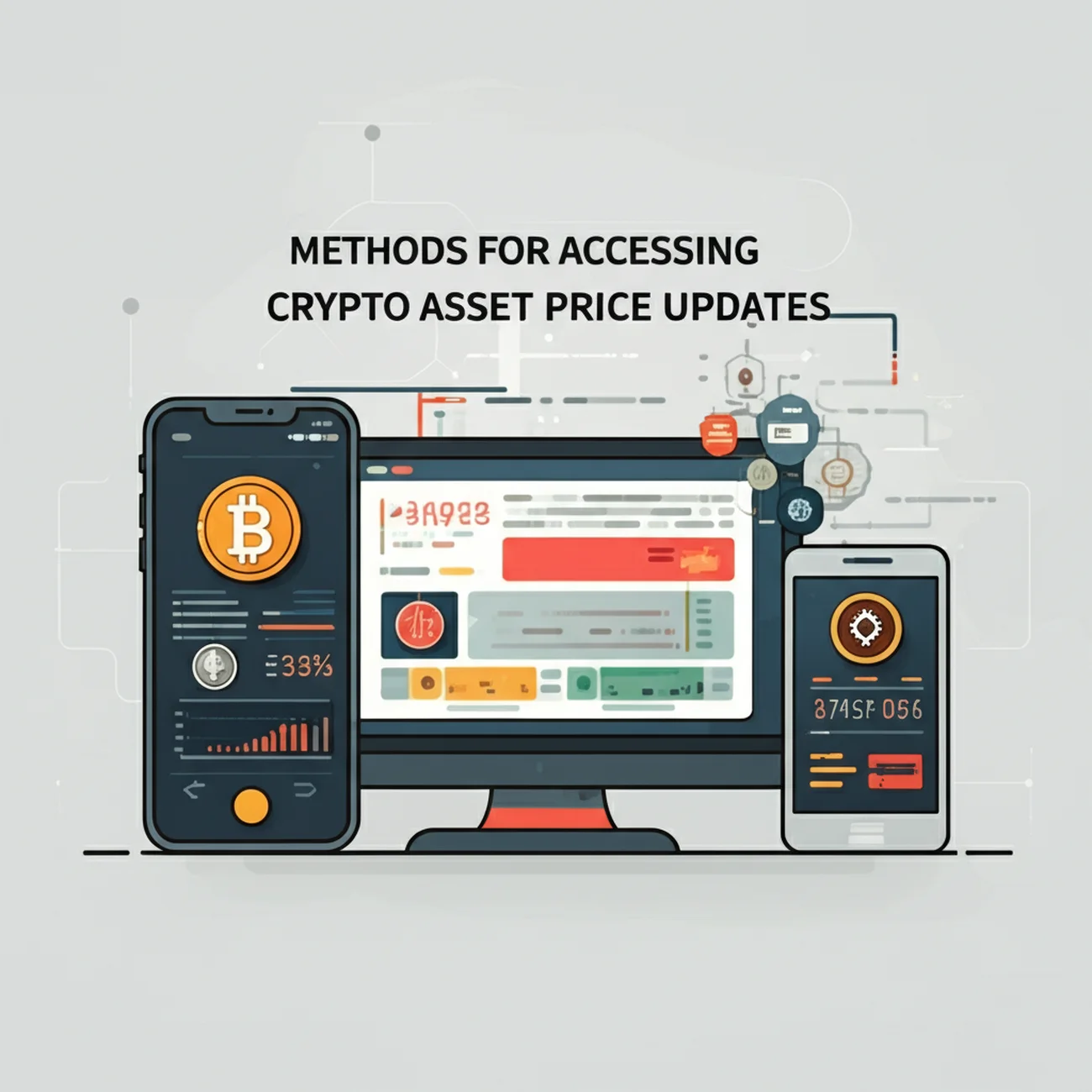
Depending on your needs and level of technical expertise, there are several ways to access real-time and near-real-time crypto price data.
For the Casual Observer: Websites and Mobile Apps
For most investors and enthusiasts, data aggregator websites and their mobile app counterparts are the go-to source. Platforms like CoinGecko and CoinMarketCap offer a user-friendly interface with a wealth of information at a glance. Users can see a ranked list of cryptocurrencies, view charts, and check key metrics like market cap and 24-hour volume. Portfolio tracking apps, such as Delta or CoinStats, integrate with these data sources to allow users to monitor the value of their specific holdings in real-time.
For the Active Trader: Exchange Interfaces and Trading Terminals
Active traders require the most immediate and granular data available. The most direct source is the trading interface of the exchange they are using. These platforms display real-time order books, recent trade histories, and advanced charting tools powered by their own internal WebSocket feeds. This provides zero-latency information for the assets listed on that specific platform, which is critical for high-frequency trading and scalping strategies. Professional traders might also use specialized crypto trading terminals that aggregate data from multiple exchanges into a single, powerful interface.
For Developers and Quants: Direct API Access
Developers building applications, services, or quantitative trading algorithms need direct access to the raw data. By obtaining an API key from an exchange or a data aggregator, they can programmatically pull market data into their own applications. Free API tiers often have rate limits (a cap on how many requests can be made per minute), while paid, enterprise-grade subscriptions offer higher limits, faster update speeds, and access to deep historical datasets. This direct access allows for the creation of custom dashboards, automated trading bots, and complex market analysis tools.
Beyond the Ticker: Essential Metrics to Monitor
A price ticker tells you what an asset is worth right now, but it doesn’t tell the whole story. To truly understand market dynamics and make well-informed decisions, it’s crucial to look at several other key metrics that provide vital context.
Trading Volume
Trading volume represents the total value of an asset that has been traded over a specific period, typically 24 hours. It is one of the most important indicators for assessing market health and validating a price trend. A price increase accompanied by high trading volume suggests strong buying pressure and conviction behind the move. Conversely, a price move on low volume is often seen as less significant and potentially unsustainable. High volume also indicates good liquidity, meaning you can buy or sell the asset easily without drastically affecting its price.
Market Capitalization
Market capitalization, or “market cap,” is calculated by multiplying the current price of an asset by its circulating supply. It’s the primary metric used to gauge the relative size and stability of a cryptocurrency project. Large-cap assets (like Bitcoin and Ethereum) are generally considered more established and less volatile than mid-cap or small-cap “altcoins,” which have greater growth potential but also carry higher risk.
Order Book Depth
Order book depth refers to the visualization of the quantity of buy and sell orders at different price levels. A “deep” order book has a large number of orders on both the bid and ask sides, close to the current market price. This signifies high liquidity and means that large trades can be executed with minimal slippage (the difference between the expected price of a trade and the price at which it is actually executed). Traders analyze order book depth to identify potential support and resistance levels, often referred to as “buy walls” and “sell walls.”
The Evolution of On-Chain Data and Oracles
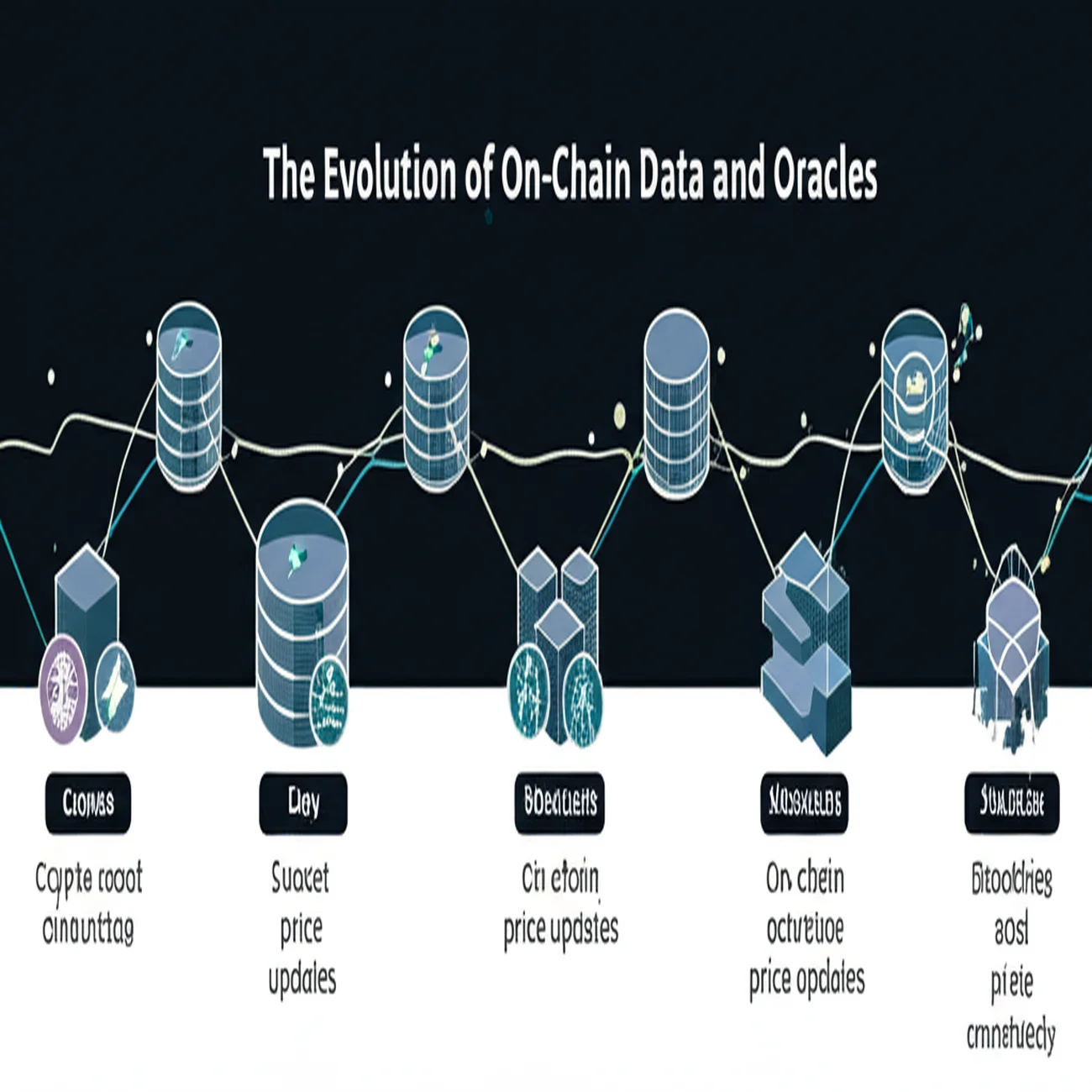
While centralized exchanges have traditionally been the primary source for price information, a new frontier is emerging with the growth of decentralized finance (DeFi). DeFi applications built on blockchains, such as lending protocols and decentralized derivatives platforms, need a way to access reliable price data to function correctly. For example, a lending platform needs to know the real-time value of collateral to determine if a loan position needs to be liquidated.
However, blockchains cannot natively pull data from external sources like exchange APIs. This is known as the “oracle problem.” The solution is blockchain oracles, which are third-party services that act as a bridge between the blockchain (on-chain) and the real world (off-chain).
Leading oracle networks like Chainlink and the Pyth Network work by sourcing price data from numerous high-quality aggregators and exchanges. They then use a decentralized network of nodes to validate this data and deliver a single, highly reliable price feed onto the blockchain. This allows smart contracts to securely and trustlessly access the same critical price information that traders rely on, powering a new generation of transparent and automated financial products.
Conclusion
In the dynamic and often chaotic cryptocurrency market, instant and reliable crypto asset price updates are the bedrock of informed decision-making. We’ve seen that prices are not set by a single entity but are born from the collective activity across a global network of exchanges. This data is then captured and delivered through sophisticated technologies like APIs and WebSockets, and made accessible through a variety of platforms, from user-friendly websites to powerful developer tools.
For any market participant, looking beyond the price ticker to understand metrics like trading volume, market capitalization, and order book depth is essential for gaining a complete picture of market conditions. As the industry continues to mature, the infrastructure for delivering this data is also evolving, with decentralized oracles now providing trustless price feeds directly to blockchain applications, further integrating real-world data into the DeFi ecosystem. Ultimately, mastering the flow of price information is a fundamental step toward successfully navigating the exciting and ever-changing world of digital assets.
